

Should I Reassure My Anxious Child?
By Will Sessions, BACP-accredited psychotherapist and SPACE provider
When your child is anxious, reassuring them is one of your most natural responses. They tell you they're scared and you want to help them feel safe. So you tell them:
“You'll be fine.”
“There's nothing to worry about.”
“You studied hard enough.”
And often it works - for a while. But if your child comes back with the same question ten minutes later, or needs more and more reassurance before they can do ordinary things, you might start wondering whether reassuring them is actually helping.
The answer isn't that you should never reassure an anxious child. The important question is what role reassurance is playing in their anxiety.
When reassurance isn't just reassurance
All children need reassurance sometimes. If your child is frightened by something new, upset after a difficult day or looking for comfort from you, responding warmly and reassuringly is part of being a supportive parent.
The problem isn't reassurance itself, it's when your child begins to rely on it to get rid of anxiety or uncertainty.
You might notice that they ask the same question repeatedly but your answer only helps for a little while. They need to ask you again, or you need to give a specific answer, they become distressed if you don't reassure them, they want you to guarantee something won't happen. You find yourself repeatedly checking, confirming or promising things on their behalf.
This is when reassurance can become part of the anxiety cycle.
Why does my child keep asking for reassurance?
Anxiety doesn't like uncertainty. It wants to know:
“Will I definitely be okay?”
“Are you absolutely sure I didn't do something wrong?”
“Do you know for certain that Mum will come home?”
When you provide reassurance, your child's anxiety will usually reduce. That relief teaches their brain something important:
When I feel anxious, I need reassurance to feel safe again.
But reassurance can't remove uncertainty permanently. The worry comes back, your child asks again and the cycle repeats. Over time, they can become dependent on reassurance rather than developing confidence that they can tolerate uncertainty themselves.
Reassurance can become an accommodation
Repeated reassurance is one of the most common things parents and other family members do to reduce a child's anxiety or help them avoid distress. Other common accommodations families make are changing routines, speaking for a child, checking things for them or helping them avoid situations that make them anxious.
These responses are natural and instinctive. Occasional reassurance is a normal and often helpful part of parenting for both anxious and non-anxious children. But when we accommodate our children's anxiety we unintentionally feed the story their anxiety is telling them - that they can't handle it. And that stokes their anxiety in the long term.
What should I say instead of reassuring my child?
The opposite of reassuring isn't becoming cold or refusing to respond when your child is scared. In fact, SPACE teaches parents to increase support when they're reducing accommodations like reassuring.
A supportive response communicates two things: I understand that this is hard, and I believe you can cope with it.
So instead of: “Don't worry, I promise you'll be fine”
You might say: “I can see you're really worried about this, and I know you can handle feeling uncertain.”
Instead of: “I promise you won't be sick.”
You might say: “I know you're worried about feeling sick. That's a horrible feeling to sit with.”
Instead of repeatedly answering: “Are you sure I didn't upset her?”
You might say: “I know you'd really like me to give you certainty about that. I think this is one of those times when anxiety is asking you to know something we can't know for sure.”
The exact words matter less than the message - I see that you're struggling and I believe you're capable of coping.
Should I just stop giving reassurance?
Usually, no. If your child currently asks for reassurance frequently, suddenly refusing can create a lot of distress and conflict. It can also feel very different from the supportive approach you're trying to develop.
Reducing accommodation is usually more effective when it's planned and gradual. You might start by identifying one particular reassurance pattern. For example, perhaps your child asks every night whether they will be sick. You might gradually reduce how many times you answer their question.
We don't want our child to feel we're not helping them anymore or abandoning them so it's important that when we're reducing any accommodation, including reassurance, we increase our support in other ways that help them build their ability to cope with anxiety.
What if my child gets more anxious when I stop reassuring them?
They might. If reassurance has become the way your child manages anxiety, reducing it can initially make them feel more discomfort and they might get upset, angry or distressed.
That doesn't necessarily mean you should immediately return to the old pattern. Part of learning to tolerate anxiety is discovering that uncomfortable feelings can rise and fall without someone else having to make them disappear.
This is also why changes to reassurance work better when they're accompanied by increased support and confidence from the parent.
What about reassurance in OCD?
Reassurance can be particularly important in OCD. A child or teenager with OCD might repeatedly ask questions connected to an obsession:
“Are my hands definitely clean?”
“Do you think I'm a bad person?”
“Are you sure I didn't hurt somebody?”
“Can you promise this food isn't contaminated?”
Having these questions answered can become part of the compulsion. The parent may not be performing the ritual themselves, but they can get recruited into their child's OCD. In these situations, reducing reassurance is often an important part of reducing accommodation.
How do I know whether I'm supporting or accommodating?
A useful question to ask yourself is: Is my response helping my child avoid anxiety or is it helping them learn they can cope with it?
Support says: “I know this is difficult and I believe you can handle it.”
Accommodation can unintentionally communicate: “You need me to make this anxiety go away before you can cope.”
What if reassurance is only one of many things we've changed because of anxiety?
Most families are making multiple accommodations for their anxious child or teen.
You might also be letting your child avoid certain places or activities, answering for them, changing plans, checking things for them, sleeping beside them or doing things for them that they are capable of doing themselves.
If anxiety is beginning to shape family life in several different ways, it can help to step back and look at the whole pattern rather than trying to change reassurance in isolation.
[Read more: What is family accommodation?]
How can SPACE help?
SPACE is a parent-based treatment for childhood and adolescent anxiety and OCD. One of its central aims is helping parents identify and gradually reduce accommodations while increasing supportive responses. That means parents can learn a different way of responding to repeated reassurance seeking without withdrawing warmth, empathy or emotional support.
And because SPACE works directly with parents, your child doesn't have to attend therapy for you to begin making changes.
Read more: How Can I Help My Anxious Child


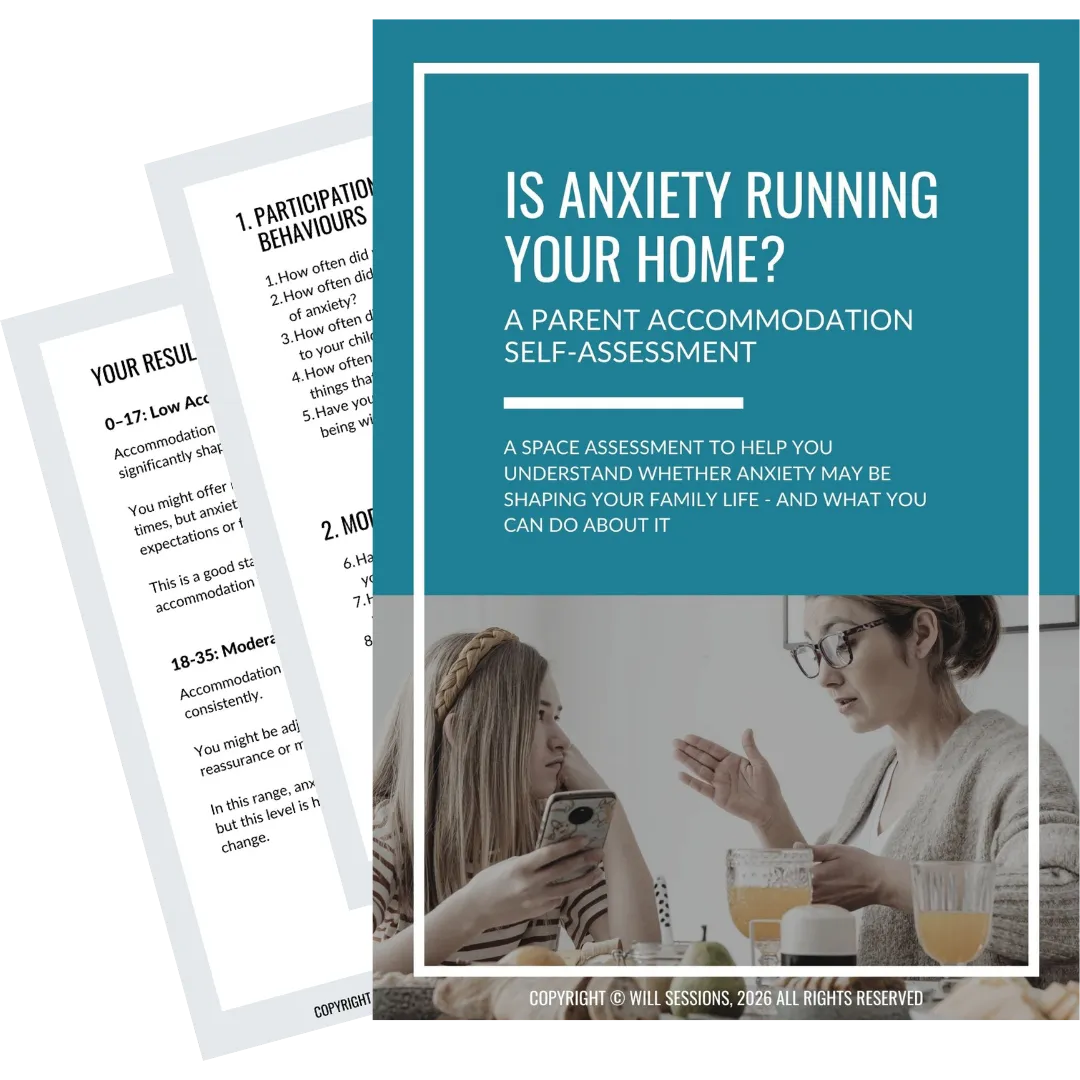
Is Anxiety Running Your Home?
Sign up below to get our free SPACE self-assessment and discover whether accommodation may be keeping your child stuck - and what you can do about it
Is Anxiety Running Your Home?
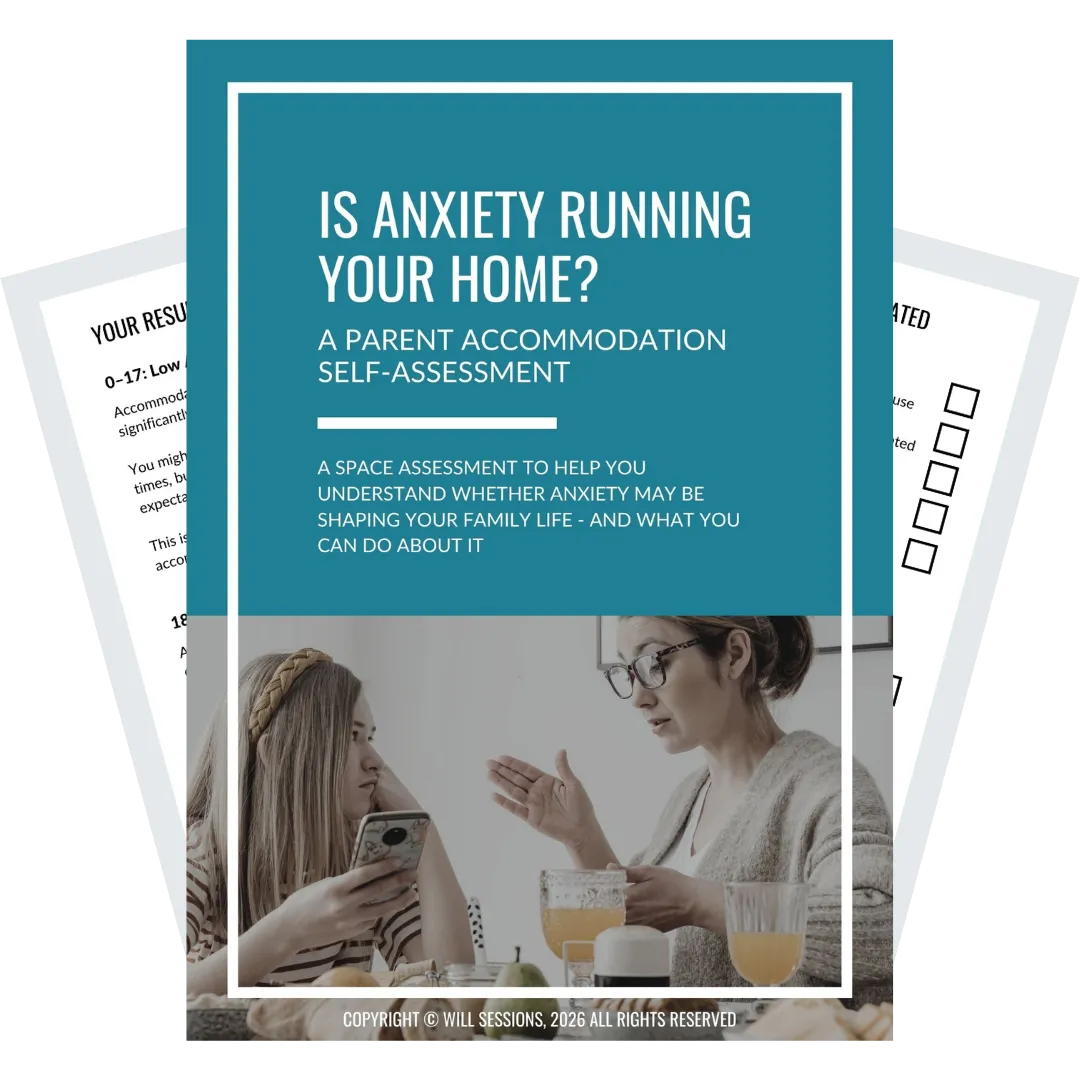
Sign up below to get our free SPACE self-assessment and discover whether accommodation may be keeping your child stuck - and what you can do about it
© Will Sessions 2026 All Rights Reserved